
Why Do I Feel Bad? Understanding Unjustified Guilt
 Guilt is a normal, healthy emotion. Experiencing it when you’ve hurt someone or when you’ve made a mistake is a good sign—it means you have a conscience. But sometimes, you may experience unjustified guilt.
Unjustified guilt is when people punish themselves even though circumstances are out of their control, or they did not deliberately hurt anyone.
In the context of the pandemic, we are living in a period where we are reminded daily that our actions have consequences. There are several factors during this pandemic that have made us more vulnerable to unjustified guilt: guilt surrounding bereavement; guilt that your job is secure, or you are in a safe position, while others are not; guilt over parenting decisions; guilt because you cannot do more to directly help others; guilt after going to a social gathering; guilt for not going to a social gathering…the list goes on.
So, what can we do to avoid future guilt?
You may not be able to control the fact that you experience guilt, but you can control how you respond to it.
It is important to acknowledge that you are feeling guilty and identify the reason, then recognize the negative critical thoughts which can lead to a distorted idea of what happened or disproportionate levels of guilt. Try and reframe those negative thoughts with something you would say to a friend if they were going through a similar situation. If speaking to a friend, you would point out the good things they have done, remind them of their strengths, and how much you value them. You deserve this same kindness.
Be gentle with yourself. The ability to look at a situation from another’s perspective is incredibly powerful. It triggers a different set of emotions, the foundation of empathy that you need to be easier on yourself.
If you’re feeling guilty after a specific action, pause and evaluate what you can do differently in the future. It may help to identify what values you want to live by during the pandemic, even writing them down, so you can refer to them when if a situation arises. Remind yourself that you are doing this for your physical and mental safety which is another way of taking care of yourself.
Shirley Bellardo, LCSW, LCADC
 Taking Small Steps for a Big Impact
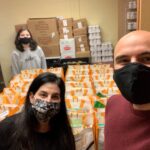 Group Efforts
 Go the Extra *MILE*
 The COVID-19 vaccine provides reassurances in keeping us physically protected, yet it does not automatically reduce or eliminate our anxiety, change in that way is going to take time and patience after all we have endured the past 18 months.
  As restrictions start to ease, more and more employees are returning to the workplace, no doubt with anxious feelings, questions, and possible concerns. Feeling dread and uncertainty is perfectly normal…
 We have all made significant adjustments to our lives in the past year. Adapting to life during a global pandemic was difficult; now that vaccines are widely available, we are still facing challenges about our personal comfort levels being in the community and returning to work.
 Shavuot also is a time of great rejoicing, both in community in the synagogue and at home. Ashkenazi tradition includes the eating of dairy foods, such as blintzes and cheese cake, because the Torah is likened to milk and honey. Sephardic communities have more elaborate Shavuot dishes many of which also involve cheese but in different forms such as special rice and cheese pies and Turkish-style rice pudding (sutlatch).
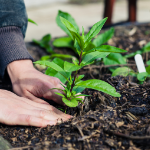
  Through two recent donations, JFCS is growing a program within our food pantry to encourage and empower clients to grow their own food. Recently, the agency was able to provide tomato plant seedlings to clients. JFCS agency has a relationship with
  Why encourage clients to grow their own food?
 How Can You Help?
 One year ago, the World Health Organization reported the COVID 19 virus as a global pandemic and the world changed. Requirements for social distancing, wearing a mask and staying at home, for most, resulted in anxiety. Most of us experienced fear and worry about contacting or spreading the virus; gradually, routines developed, and we cautiously adjusted, still with a good amount of stress.